Opening a window between London and Gaza
New Ways of Talking
Judi Conner
This month a barrier was breached, and people not normally able to talk to each other had an opportunity to get together.
Fourteen students from Gaza and London chatted, joked, even wept together in a shared space, despite the fact that Gaza has been largely cut off from the rest of the world by land, sea and air for eight years, and despite its battering from the Israeli offensive last summer.
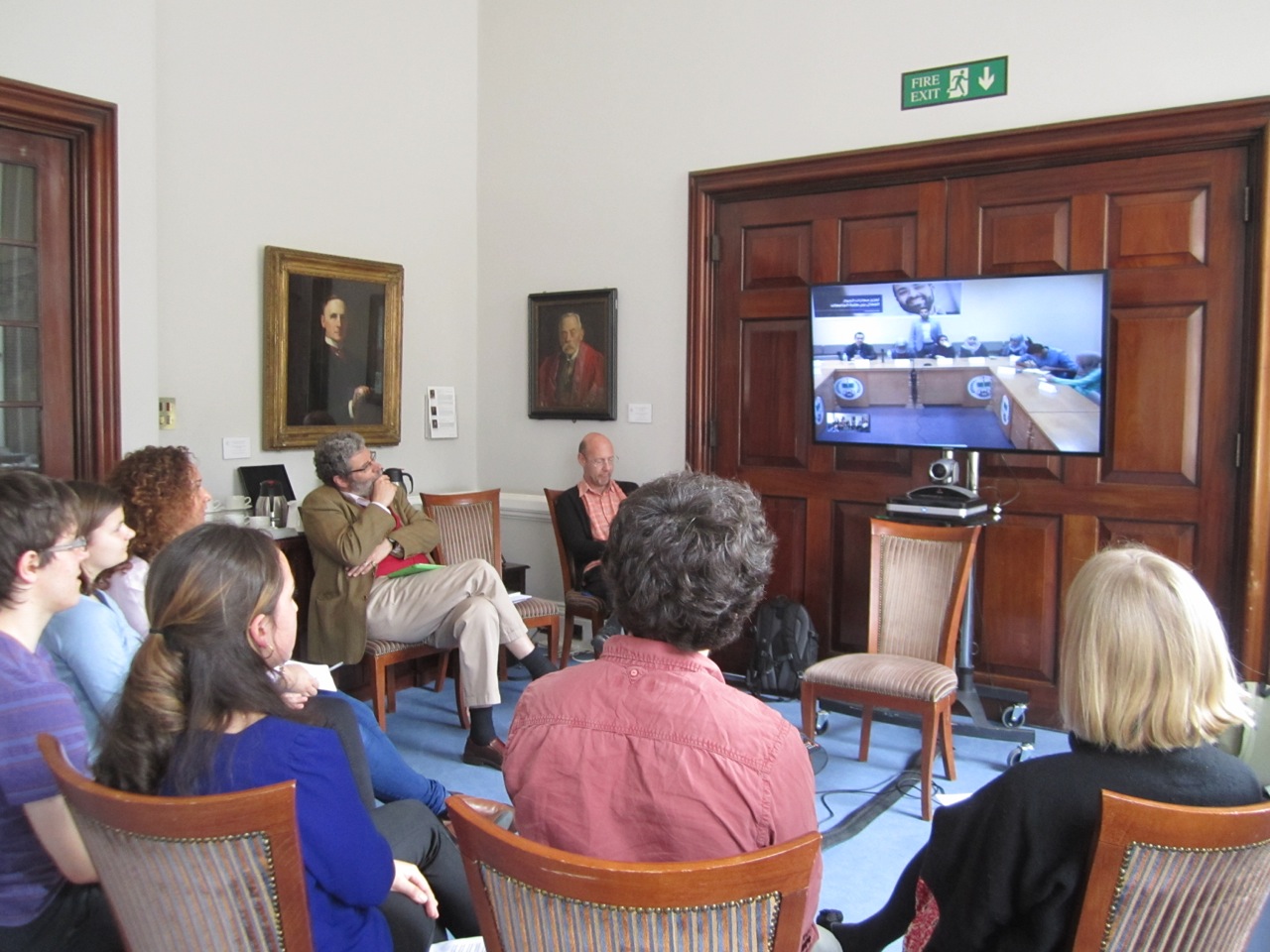
This initial blockade-busting meeting took place courtesy of high quality videoconferencing, opening a ‘window’ between seminar rooms in Al Azhar University, Gaza, and the British Academy in London. The conversation flowed easily, as topics ranged from the mundane to the difficult.
From Gaza: “Is it true you British talk a lot about the weather?”
London: “Yes, well it’s always changing, so it’s interesting! What do you talk about?”
From London: “And how do you regard us here, given that the Brits have broken so many historic promises to you guys?”
Gaza: “We know that, but we’re kind, you know…..we’re ridiculously kind!”
From Gaza: “If you understand our situation so well, are you able to have Jewish friends?”
London: “Yes, we do, we talk about the situation.” “Actually, I am Jewish!”
From London: “ How would you like the world to view Gaza?”
Gaza: “We’re not pathetic, broken, desperate people. We’re happy, We’re strong.”
From Gaza: “What are the big projects you people want to take on once you’ve left university?”
London: “Hmm, challenging… Need to think more about that one.”
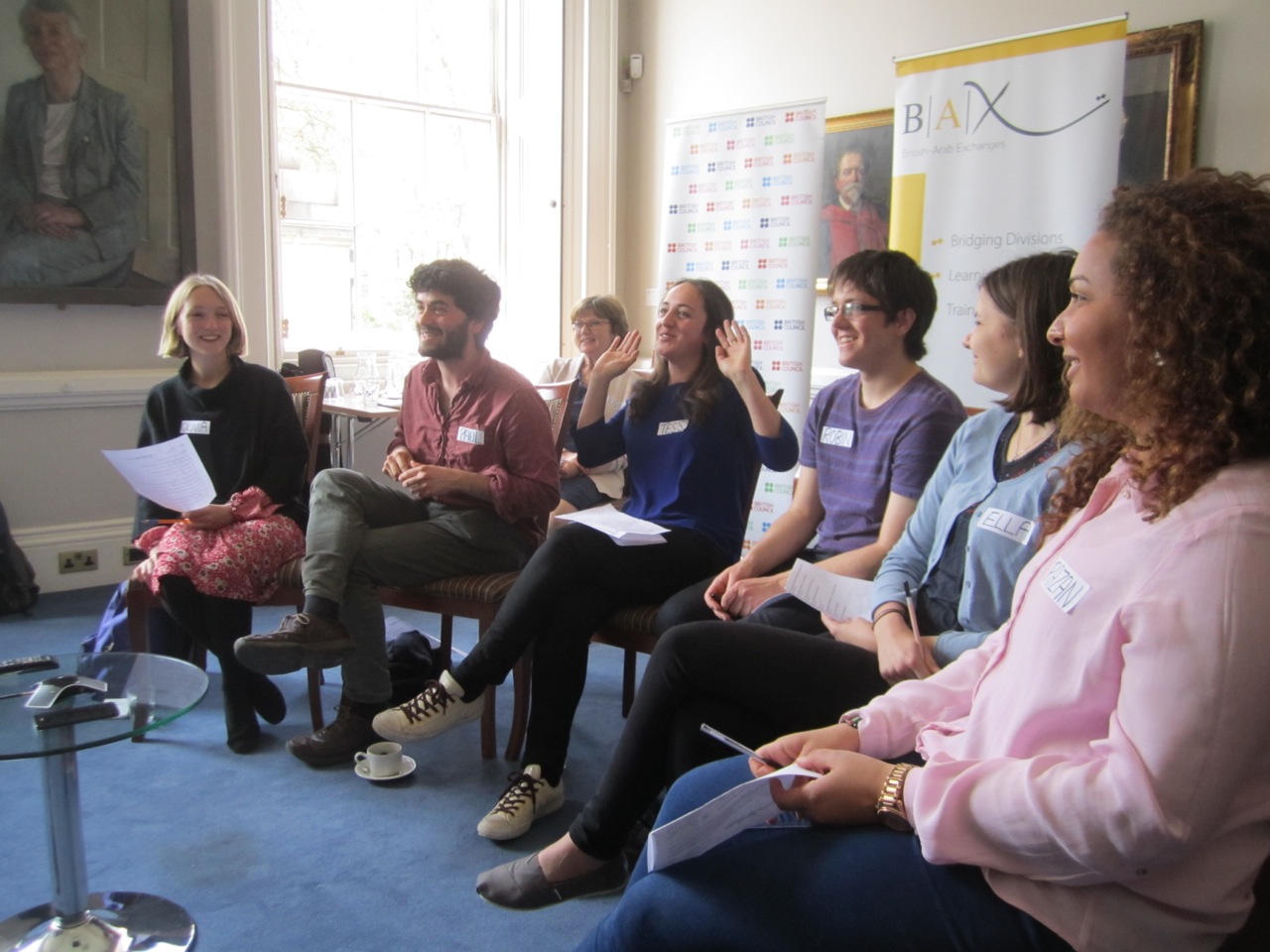
For two hours, the students were intently absorbed in finding out about each others’ lives and opinions, and now the conversation continues through Facebook, Twitter, a shared website, and perhaps further videocon exchanges. The friendship is growing as they explore ways to support each other in their universities and communities.
The exchange event marked both the close of one significant programme in Gaza, and the launch of something new.
Looking backwards, it marked the close of a two-month programme of practical workshops addressing Positive Dialogue Skills. The eight students gathered here at Al Azhar University were just a few of the 103 Gazan students, from seven universities and colleges, who had completed these greatly over-subscribed courses. The workshops, described as ‘life-changing’ by some of the participants, had been commissioned by the British Council in Gaza, and designed and delivered to a team of Gazan facilitators by British-Arab Exchanges (BAX).
In recent months there had been local concern about the violent turn some political discussions have taken on the university campuses in Gaza, and the lack of opportunity for young Gazans to experience productive dialogue. Of course, this scarcity of good communication models is also universal, and the themes covered by the BAX course are powerful ones for anyone’s personal toolkit, whether a student or a head of state. Modules included Dealing With Impossible People, Managing Emotion, Handling Disagreement, and Negotiating for Win/Win (mutual advantage). Which of us, in whatever country we live, can claim to be an expert on any of these very crucial inter-personal skills?!
Meanwhile, looking ahead, the Gazan-London videocon exchange was also the launch of an opportunity to take these brushed-up dialogue skills forward. With support from the British Council in London, Jerusalem and Gaza, BAX gathered a group of students from three London University colleges (SOAS, Kings and UCL) to engage in conversation of some depth, with a view to forging friendship, improving understanding and developing positive communication with their counterparts.
From small beginnings in two seminar rooms linked by a screen, who knows how this might develop? While political, religious and sectarian divides seem entrenched – across and within both Europe and the Middle East – the simple act of practising creative dialogue, building connections, and exploring collaboration appears as a refreshing new option.
Both BAX and the British Council are very aware that if Gaza can lead the way in forging new communication models like this, perhaps further channels of contact can be opened between British young people and their counterparts in Syria, Iraq, Libya and Yemen….crossing boundaries set up to cordon us off along lines of political dogma and belief. Promoting the old idea of ‘jaw, jaw’ as preferable to ‘war war’, will surely lay some foundations for a stable world that respects difference yet thrives on positive interaction. Fourteen students demonstrated this month that creative sparks can fly when people come together, ready to learn from each other and collaborate.
This is work in progress, so watch this space – and BAX will post a link to the Gazan/London students’ website when it’s up and running. BAX would also be very grateful for any donations its supporters would like to make to the running costs of this project. Contact info@bax.org.uk or contribute directly through the Donate-Online Link on the BAX homepage at www.bax.org.
“A few years ago this could never have happened!” observed Paul, a science student at University College London. “But now we have the technology to take us beyond the walls separating us.”
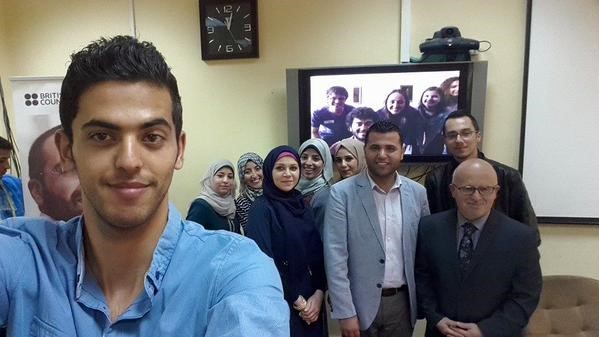
Using Facebook, emails, videocon and a variety of apps, they will be able to keep in touch. One further media staple of our times was also in evidence as the videocon meeting closed. Yousef, a student in business studies at Al Azhar University, suggested “Can I take a selfie with you all?” In that climate of “anything is possible”, he grouped everyone round the screen, and made it work. It was a great selfie, spanning two continents, and marking the start of a significant British-Gazan ‘entente’.